Thickness | Glass we fabricate: 1/4in (6mm) and 3/8in (10mm) for protectors and tabletops; 1/2in (12mm) for back-painted tops on a substrate; 3/4in (19mm) for bar tops, raised returns and anywhere the edge is on show. Slab products: nominally 2cm (3/4in) and 3cm (1-1/4in) depending on the manufacturer’s line. |
Glass type | Tempered for any countertop, bar top or vanity top it is roughly four times the strength of annealed and breaks into blunt fragments. Annealed is acceptable only for a loose tabletop protector that sits on a supporting surface, and we still recommend tempering. Slab products are not glass in the safety-glazing sense and are not tempered. |
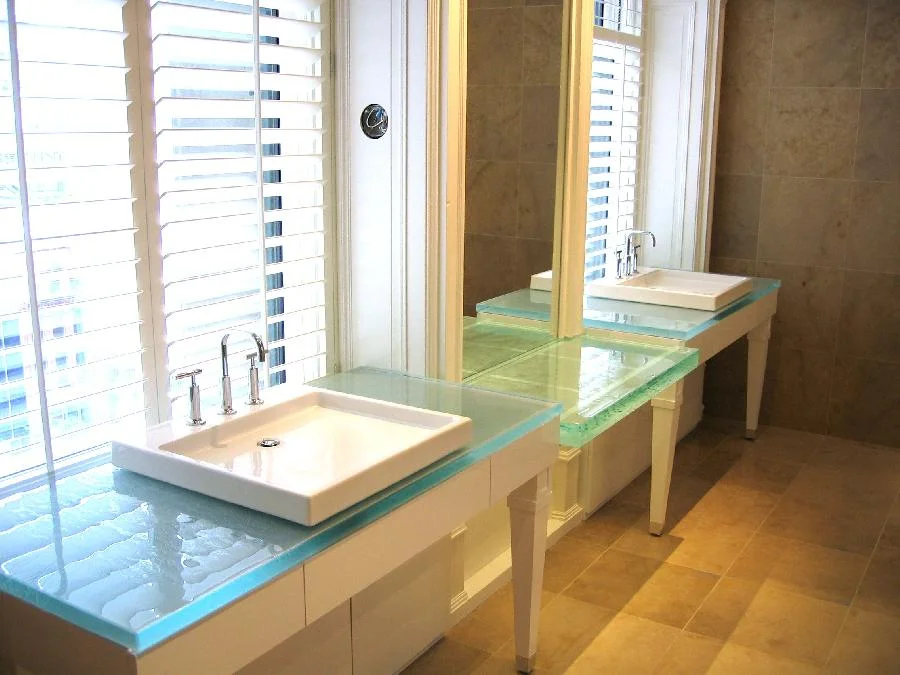
Glass clarity | Standard float (clear) a visible green cast on the polished edge and over pale colours, more pronounced as thickness increases. Low-iron (“ultra-clear”) near-colourless edge, true whites and pastels. At 3/4in we specify low-iron for any light back-paint colour. |
Maximum span | Glass laid on a full substrate is continuously supported, so span is not the limit the substrate and cabinet run are. For a raised bar return in 3/4in tempered, plan on standoffs at roughly 24-30in centres with an overhang no greater than about 12in past the last support, and more support for a public or commercial bar. |
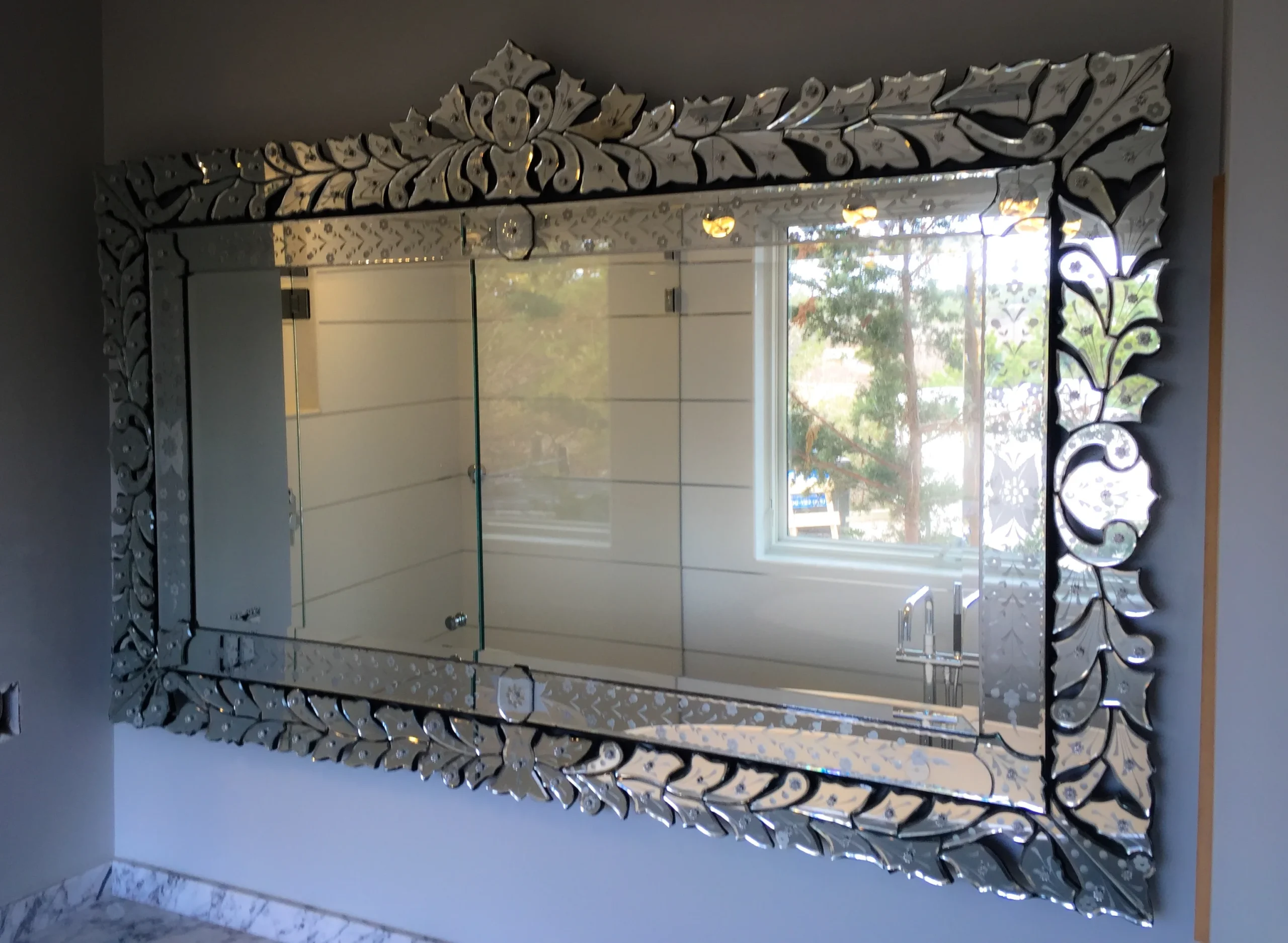
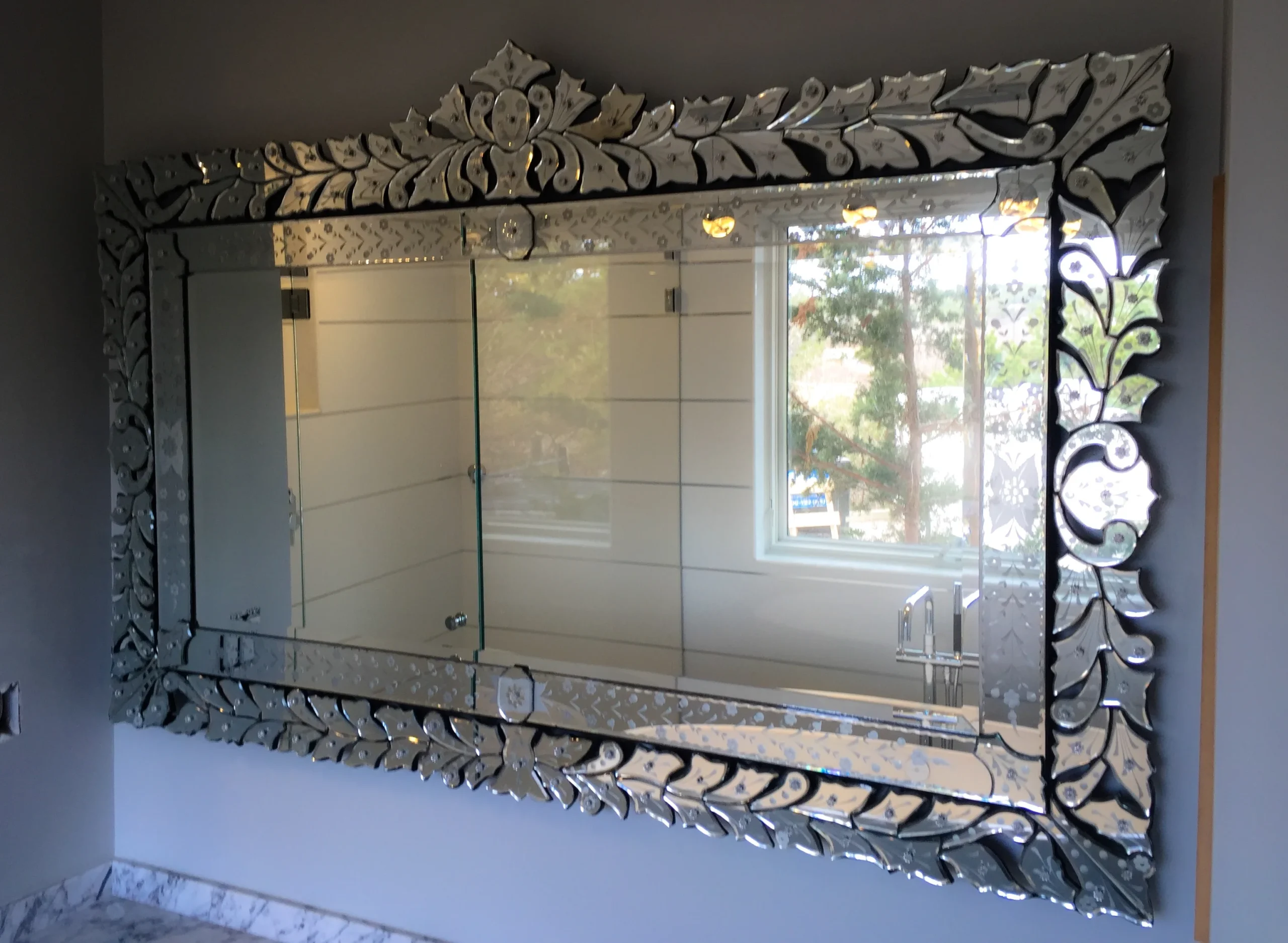
Edge profile | Flat polished (square, most common on back-painted tops), eased/pencil polish (softened arris, safest around seating), bevel (typically 1/2in, catches light, traditional), mitred (two pieces mitred and joined to read as a thicker slab without the weight). Slab products take stone edge profiles eased, bullnose, ogee cut by the slab fabricator. |
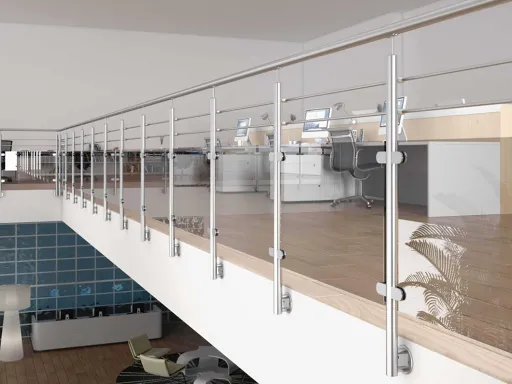
Hardware finish | Standoffs, brackets and support posts in matte black, oil-rubbed bronze, brushed nickel, polished chrome, brass and stainless. On Cape Cod, stainless or powder-coated hardware holds up better than plated finishes in salt air, especially in a screened porch or pool-house bar. |
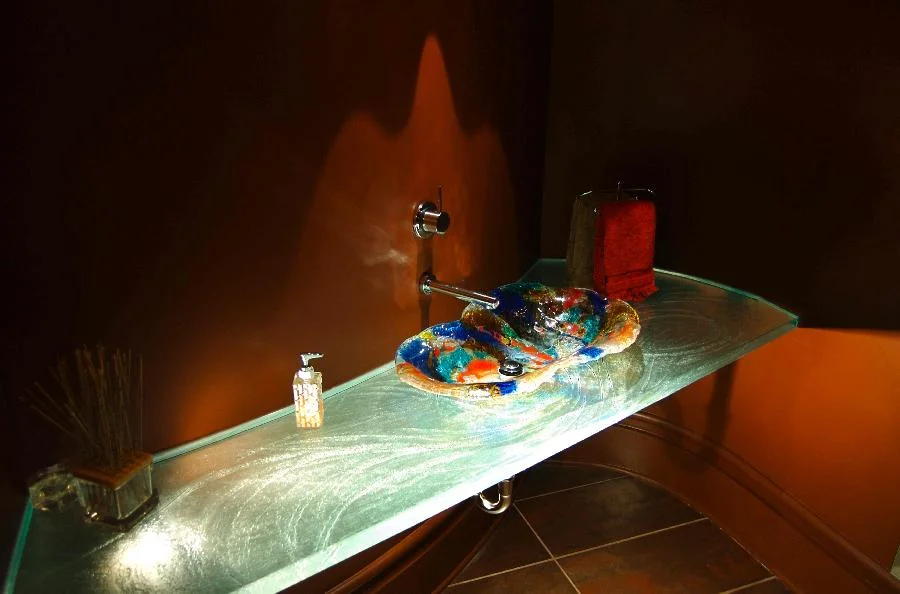
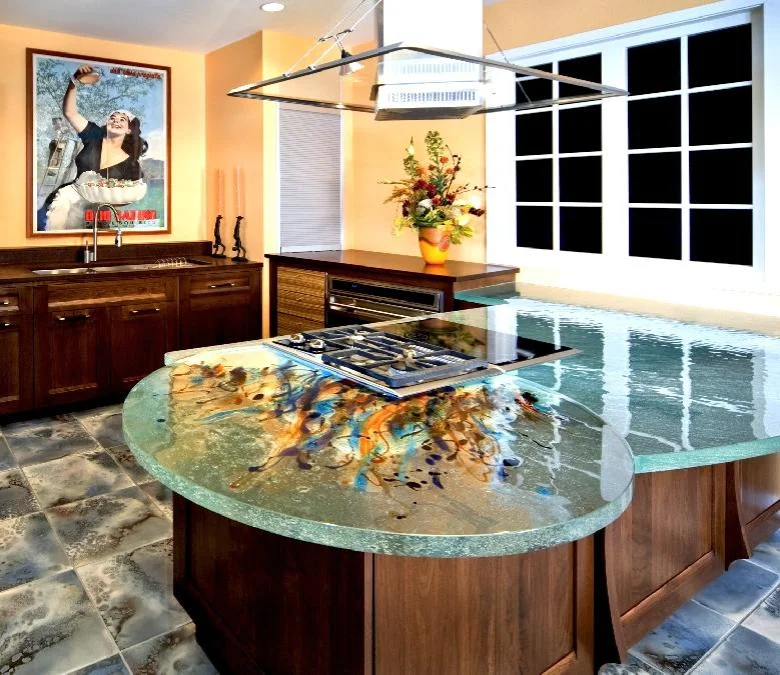
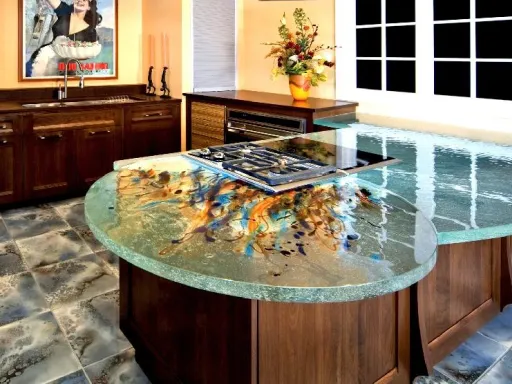
Back-paint & texture | Any colour matched to a paint chip; metallics and pearls available. Surface options: standard polished float, acid-etched/satin (hides fingerprints, softer look), or a kiln-formed texture on the underside for a rippled, water-like effect. Textured glass cannot be back-painted flat the texture is the effect. |
Heat behaviour | Tempered glass tolerates a large thermal differential far more than annealed but the back-paint and the adhesive under it are the limit, not the glass. Cement-bound slab: best heat tolerance of the three, still vulnerable to thermal shock at a cold spot. Resin-bound slab: the lowest heat tolerance here; a hot pan can scorch or discolour the binder permanently. Use trivets on all of them. |
Scratch behaviour | Glass sits around 5.5 on the Mohs scale harder than a kitchen knife, which is why knives dull on it rather than scratching it. What does scratch it is anything harder: grit, quartz sand, a dropped ceramic bowl base. On Cape Cod that means beach sand tracked into the kitchen is the real enemy. Cement-bound slab scratches more readily than glass; resin-bound sits in between. |
Sealing & maintenance | Glass and resin-bound slab: no sealing, ever. Glass ammonia-free cleaner or dish soap and water. Cement-bound slab: sealed at install and resealed on the manufacturer’s schedule typically annually in a working kitchen and wiped promptly after acid spills. |
Cutouts | Every hole, notch and cutout in glass is machined before tempering a tempered panel cannot be drilled or cut afterwards without shattering. That makes accurate templating non-negotiable. Slab products are cut on site by the slab fabricator and can be adjusted. |