

Everything we’ve covered about low-iron vs. standard clear glass assumes you want the glass to be invisible. Once you introduce color or texture, that entire conversation becomes irrelevant and often, unnecessary money.
📖 This page picks up where row 5 of our Low Iron Glass vs. Clear comparison table leaves off tinted glass, where the low-iron question doesn’t apply.
Most of the low-iron conversation exists for one reason: standard clear glass carries a faint green tint that’s visible when the glass is meant to disappear. But that entire premise depends on the glass being clear in the first place. The moment you introduce color, frost, or texture, the underlying iron content becomes functionally irrelevant you’re no longer trying to make the glass invisible, so the thing low-iron glass corrects for is no longer something you’re trying to hide.
This matters because it’s an easy upgrade to over-buy. If your design direction is heading toward bronze, gray, or frosted glass, understanding why the low-iron premium doesn’t apply can save a meaningful line item on your quote money better spent on hardware, configuration, or an EnduroShield coating that will actually be visible in daily use.
Why Iron Tint Becomes Irrelevant Once Glass Is Tinted, Frosted, or Reeded
The green cast in standard clear glass is a subtle, low-saturation color shift visible mainly at the edge or through a large expanse of otherwise transparent glass. Any of the following treatments overwhelms that subtle cast entirely:
- Color tinting (bronze, gray, charcoal): A deliberate, saturated color is added to the glass itself. The faint green of standard iron content is completely masked underneath a color many times more visually dominant.
- Acid-etching or sandblasting (frosted glass): These treatments scatter light across a matte, translucent surface. You’re no longer looking through a transparent pane at all, so there’s no clear edge or face for a tint to register against.
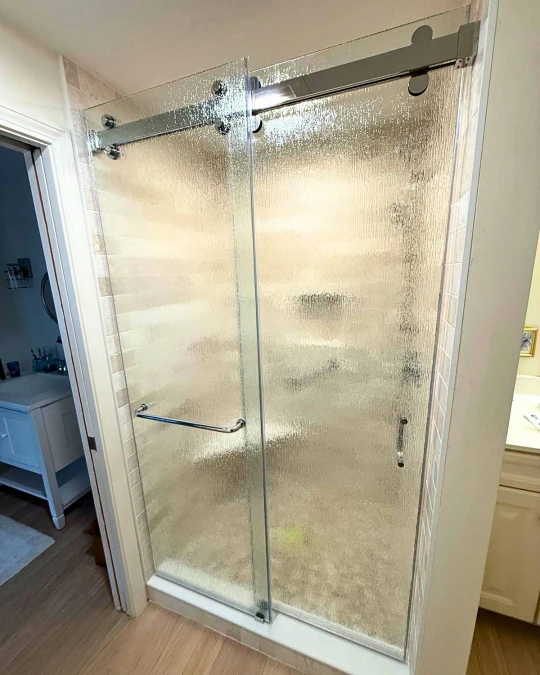
- Reeded or fluted texture: The linear ridges refract and distort light passing through the glass, breaking up any consistent color read across the panel.
In each case, you’ve replaced the property that made low-iron glass matter a perfectly transparent, colorless pane with a deliberate visual treatment. Paying extra to correct a green tint that’s already invisible under bronze coloring or frosted texture doesn’t improve the finished result.
Popular Tint Options for Shower Enclosures
- Bronze: Adds warmth and depth, particularly striking against warm stone surrounds like travertine or honey-toned marble. A popular pairing with satin brass hardware for an eclectic, sun-washed look.
- Gray: A cooler, more architectural cast that reads as intentional and modern rather than accidental. Works well in bathrooms with a crisp, minimalist material palette.
- Smoke / Charcoal: The deepest and most dramatic of the common tints, offering the strongest privacy effect among transparent (non-frosted) options while still allowing light and silhouette through.
Design Scenarios Where Tinted Glass Is Preferable to Clear
- Primary suite showers visible from the bedroom – Tinted or frosted glass adds a privacy layer that clear glass low-iron or otherwise cannot provide.
- Bathrooms with a warm, layered material palette – Bronze glass against travertine or wood-toned vanities creates cohesion that a perfectly clear panel, however optically pure, doesn’t contribute to.
- Spaces where you want the shower to read as a distinct architectural element – Rather than dissolve into the room. Gray or smoke tint gives the enclosure its own visual presence.
- Powder rooms and guest baths – Where the design goal is character rather than the disappearing-glass effect that justifies a low-iron upgrade in a primary suite.
Cost Comparison: Tinted Standard Clear vs. Low-Iron Clear
This is where the savings become concrete. Tinted glass is manufactured from standard clear glass with color added during production it does not carry the low-iron manufacturing premium at all.
| Glass Spec | Typical Installed Cost (3/8″ Frameless) | Low-Iron Premium Applies? |
|---|---|---|
| Standard Clear | $65–$85/sq ft | N/A — baseline |
| Low-Iron Ultra-Clear | $78–$102/sq ft | Yes, +$10–$18/sq ft |
| Bronze / Gray Tinted | $68–$90/sq ft | No — tint replaces the need |
| Acid-Etched Frosted | $70–$92/sq ft | No — texture replaces the need |
Choosing a tinted or frosted specification instead of a clear low-iron panel typically avoids the entire low-iron upcharge covered in our low-iron cost breakdown, while achieving a different not lesser design outcome. As with our other pricing figures, treat these as general industry ranges rather than a quote for your specific project.
Privacy & Light-Diffusion Tradeoffs
Tinted, frosted, and reeded glass all trade some degree of transparency for privacy or texture, and the tradeoff isn’t identical across options:
- Tinted glass stays fully transparent you can see silhouette and movement clearly, just through a colored lens. Privacy is minimal; the primary effect is aesthetic.
- Frosted (acid-etched or sandblasted) glass provides genuine privacy by diffusing light and obscuring direct visibility, at the cost of losing the see-through quality entirely.
- Reeded glass sits in between it obscures fine detail while still transmitting more light and a sense of movement than fully frosted glass, thanks to its linear ridges.
Thickness also plays a role in how these treatments read: as covered in our glass thickness guide, a heavier 1/2″ panel carries more visual weight regardless of tint or texture, which can either reinforce or compete with a strong color choice depending on the rest of the room’s palette.
🏛️The Glass House Recommendation: Choose low-iron glass when the goal is invisibility. Choose tinted, frosted, or reeded glass when the goal is character, privacy, or texture and skip the low-iron premium entirely when you do. The two upgrades solve different problems, and paying for both rarely makes sense.