
Frameless glass hardware is only as strong as what it’s anchored into. This reference gives builders and contractors what they need to place blocking correctly, before drywall closes in the opportunity to fix it.
📖This page supports Curbless Walk-In Showers & Wet Rooms: Planning Slope, Drainage & Fixed Glass Layout fixed glass panels in wet rooms depend entirely on the blocking covered here.
Every hinge, clamp, and channel holding a frameless glass panel is only as reliable as the structure behind it. Tile and drywall can hide a missing anchor point for years until a hinge pulls loose under normal use. That failure is entirely preventable, and it’s a framing-stage decision, not a glass-installation one.
⚠️Before You Use This as a Spec
The guidance below reflects general industry practice for frameless shower glass hardware. Exact stud spacing, blocking dimensions, and anchor pull-out ratings vary by hardware manufacturer and are governed by your local building code. Always follow the specific hardware manufacturer’s installation spec sheet and consult a structural engineer or your local code official for load-bearing requirements on your project this page is a coordination reference, not a substitute for manufacturer specifications.
Stud Spacing: U-Channel vs. Wall Clamp Hardware
Hardware type changes how blocking should be planned, since the two systems distribute load very differently.
- U-channel hardware: (used on semi-frameless and some framed configurations) fastens continuously along a track, distributing load across many fastener points rather than a few concentrated ones. This calls for continuous horizontal blocking or a plywood backer spanning the full width of the channel run not just blocking at standard 16″ on-center stud locations, which may not align with every fastener in the channel.
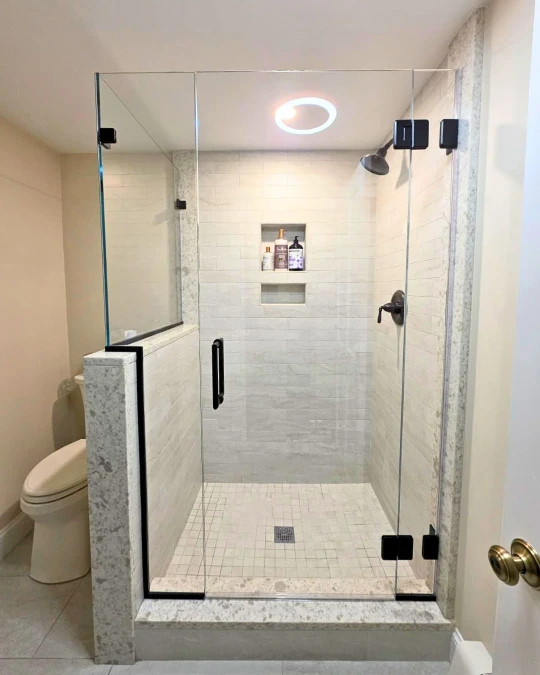
- Wall clamp and hinge hardware: (used on frameless configurations) concentrates the entire structural load at a small number of discrete points typically 2 to 4 anchor locations per hinge or clamp. Blocking here must be precisely positioned to intersect those exact mounting points, which depend on the specific hardware being specified, not on standard framing spacing.
Standard 16″ on-center studs alone are rarely a reliable anchor point for frameless hinge hardware unless a mounting location happens to land exactly on a stud. Solid blocking between studs, positioned at the hardware’s actual mounting height, is what makes point-load hardware secure.
Timing: Coordinating Blocking Before Drywall Goes Up
Blocking has exactly one practical installation window: after framing, before drywall. Once drywall is hung and taped, adding or repositioning blocking means cutting into finished wall and once tile is installed over that drywall, it means demolition.
- Finalize the glass configuration during the framing walkthrough: Door type, hardware style, and approximate hinge or clamp locations should be confirmed with your glass fabricator before the framing inspection, not after.
- Mark hardware zones directly on the studs: Using the fabricator’s rough hardware layout, even though exact final measurements won’t be taken until after tile.
- Install blocking before the framing inspection closes out: most jurisdictions inspect framing before it’s covered, making this the natural checkpoint to confirm blocking is in place.
Anchor Load Ratings for 80–100 lb Tempered Glass Panels
A single 1/2″ tempered glass panel commonly weighs 80–100 lbs, and pivot or hinged doors add dynamic load with every swing the effective force on an anchor point is meaningfully higher than the glass’s static weight alone.
📏Why “It Feels Solid” Isn’t a Test
Anchors into drywall or tile alone can feel secure by hand yet still fail under repeated dynamic loading over months of use. Toggle bolts or drywall anchors are not a substitute for solid wood blocking or an engineered backing plate at every mounting point.
Confirm the anchor pull-out rating specified by your hardware manufacturer, and make sure the blocking material and fastener type you’re using meets or exceeds it this number varies by hardware line and should never be assumed from a previous project.
Blocking Differences: Fixed Panels vs. Hinged Doors
| Configuration | Load Pattern | Blocking Approach |
|---|---|---|
| Fixed panel (clamp-mounted) | Static, concentrated at a few clip points | Localized blocking at each clamp location |
| Hinged door | Dynamic, concentrated at 2–3 hinges on one jamb | Continuous or closely spaced blocking along the full hinge jamb |
| Pivot door | Dynamic, top and bottom pivot points | Blocking at both header and sill/floor connection points |
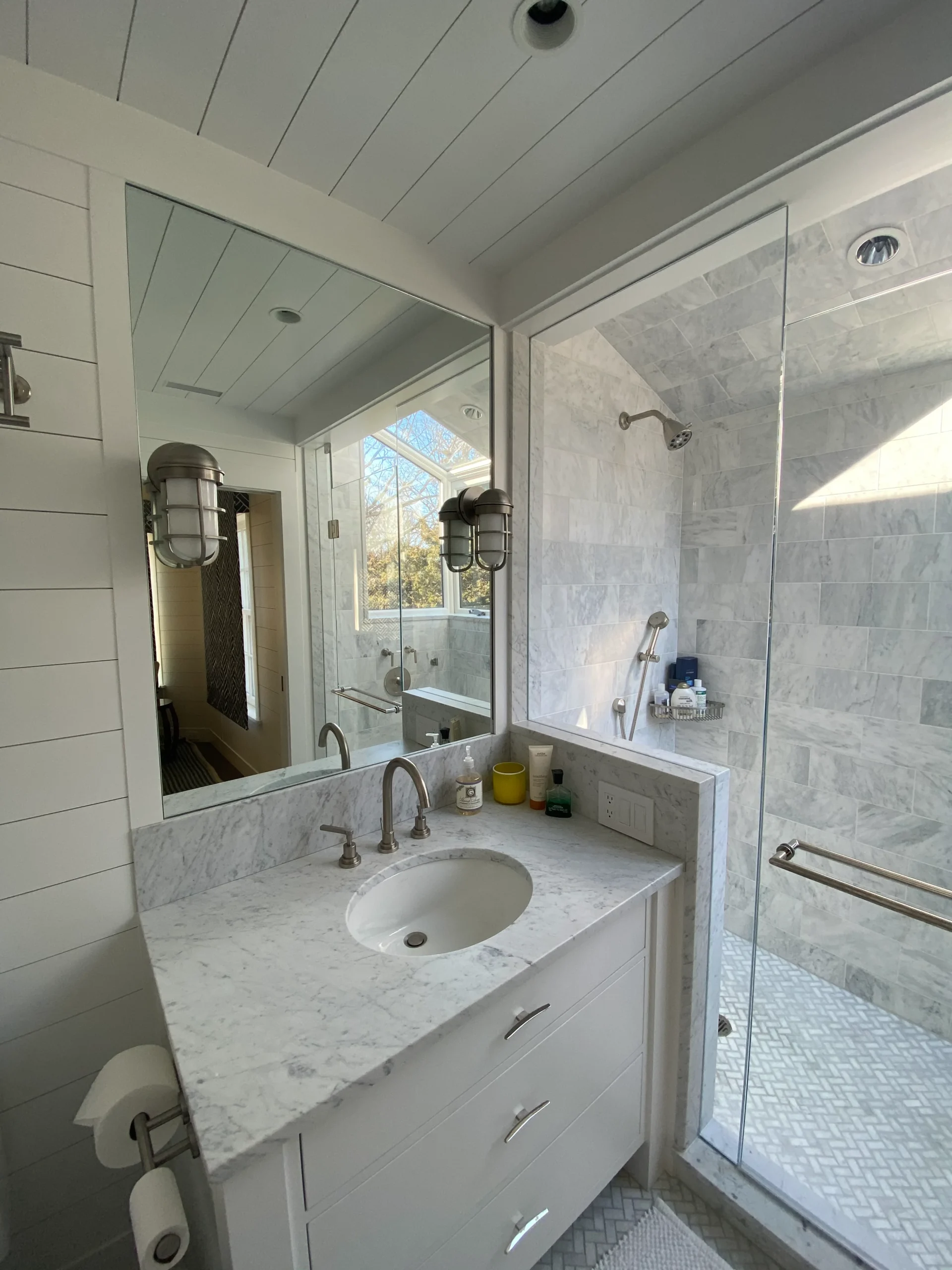
Fixed panels in wet room layouts the configuration our parent wet room guide covers in detail generally require less blocking than a hinged door, but the blocking that is needed must still be precisely located, since a fixed panel typically has fewer, more heavily loaded attachment points than a hinged door’s hardware.
What to Tell Your Builder Before Tile Starts
- Builder Coordination Checklist
- Confirmed glass door type and hardware style with the glass fabricator
- Marked approximate hardware mounting locations on studs before blocking
- Installed solid blocking sized to the hardware manufacturer’s anchor spec
- Photographed and measured blocking location relative to finished floor height before drywall
- Confirmed planned tile thickness won’t shift final hardware height outside the blocked zone
- Scheduled the glass fabricator’s final laser measurement for after tile is installed and grouted
That last point matters as much as the blocking itself. As covered in our glass thickness guide, thicker 1/2″ panels carry more weight and swing force at hinge points than 3/8″ glass if the project is heading toward a 1/2″ pivot door, say so early, since it changes both blocking size and anchor spec.