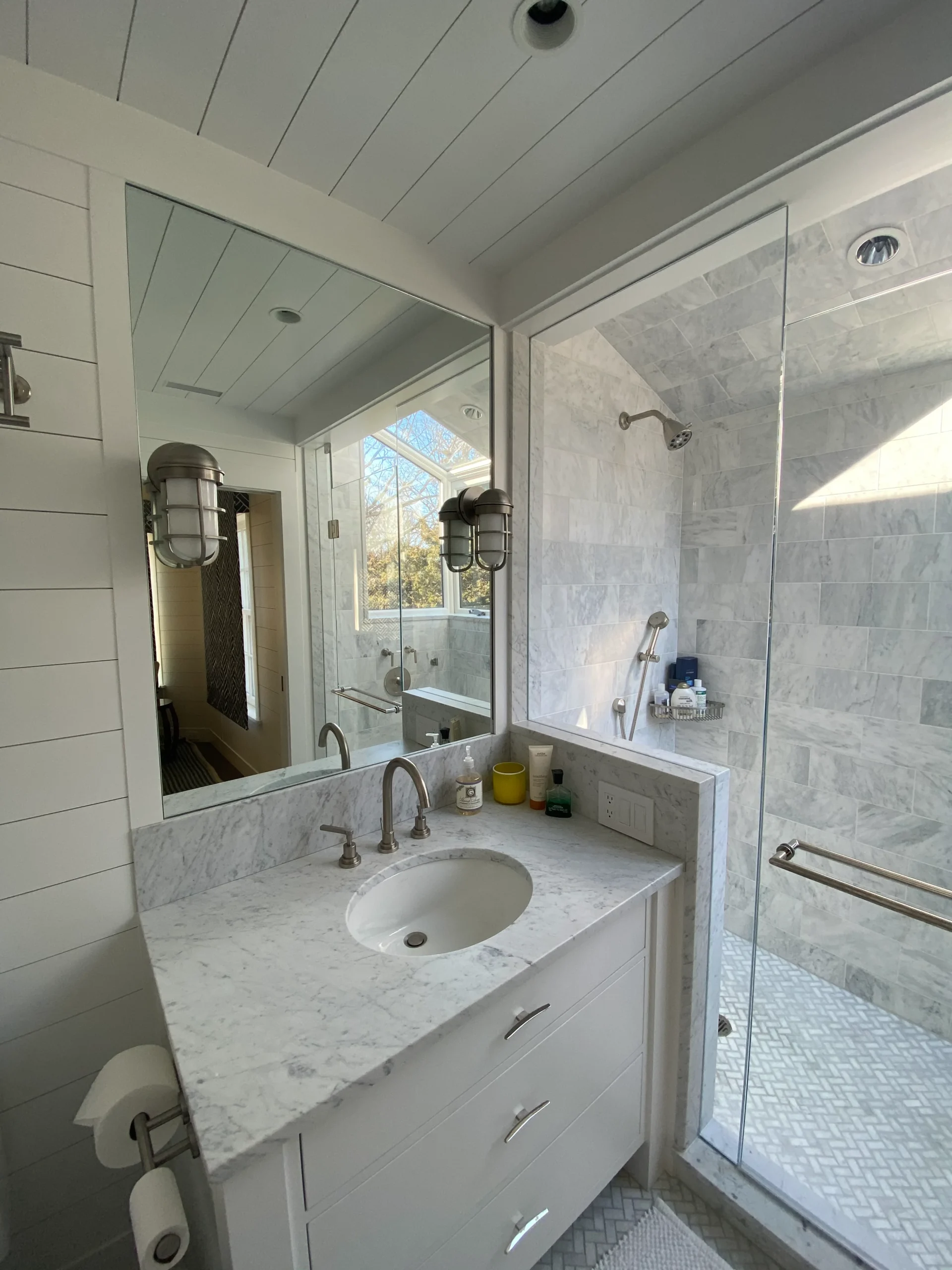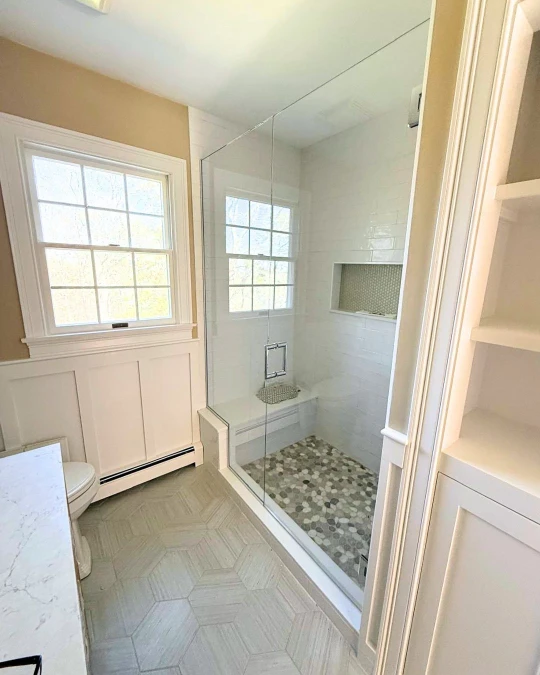

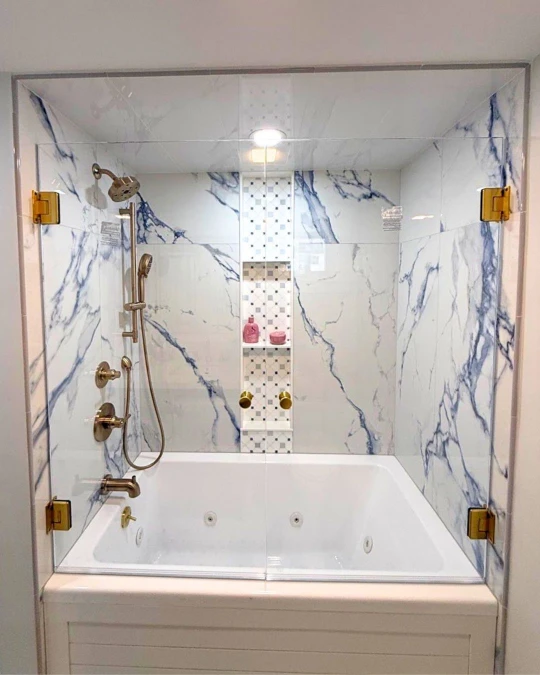

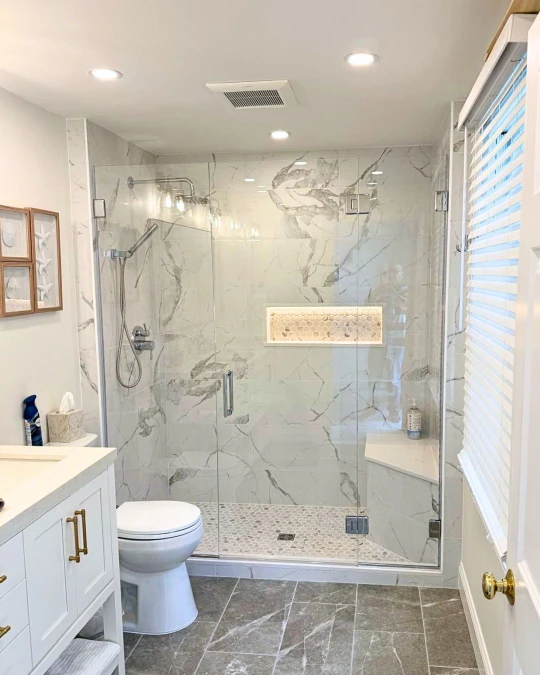
Yes, low-iron glass costs more than standard clear typically $10 to $20 more per square foot, installed. Here’s exactly where that premium comes from, how it scales with your panel sizes and configuration, and the specific situations where it isn’t worth paying.
📖Deciding whether you need low-iron at all? Start with Low Iron Glass vs. Clear: A Visual & Technical Comparison for the transmission data and edge test.
Once a homeowner decides they want the water-clear look of low-iron glass, the next question is almost always about money: how much more does it actually cost, and is that premium worth paying in every situation? Unlike the optical comparison we cover in our parent guide, this is a bottom-line question and it deserves a real answer with real numbers, not a vague “it depends.”
The short version: low-iron glass typically adds $10 to $20 per square foot to an installed frameless shower enclosure compared to standard clear glass, at the same thickness and configuration. Below, we break down exactly what drives that range, how it shifts with panel size and thickness, and most importantly when the upgrade genuinely pays off versus when your money is better spent elsewhere.
💵A Note on These Numbers
The figures on this page are general industry ranges for custom frameless glass fabrication, intended to help you budget and compare options not a quote. Your actual price depends on your specific glass supplier, panel count, hardware selection, and site conditions. Book a free measurement consultation for an exact number on your project.
The Typical $/Sq Ft Premium for Low-Iron vs. Standard Clear
At the material level, low-iron glass costs more to manufacture the purer silica sand and tighter production controls needed to strip out iron oxide add cost before the glass ever reaches a fabricator. That cost passes through to the installed price in a fairly consistent band across the industry.
| Glass Spec | Standard Clear (installed) | Low-Iron Ultra-Clear (installed) | Typical Premium |
|---|---|---|---|
| 3/8″ Frameless | $65–$85/sq ft | $78–$102/sq ft | +$10–$18/sq ft |
| 1/2″ Frameless | $85–$110/sq ft | $105–$135/sq ft | +$18–$25/sq ft |
| Semi-Frameless | $55–$70/sq ft | $66–$85/sq ft | +$9–$16/sq ft |
Notice the premium isn’t a flat dollar amount it scales with the base price of the glass itself, which is why 1/2″ frameless carries both the highest base cost and the highest low-iron premium.
How Panel Size & Configuration Change the Total Premium
The per-square-foot premium is constant, but the total dollar impact depends entirely on how many square feet of glass your configuration requires.
- Single hinged door (roughly 20–24 sq ft): Expect a total low-iron premium in the $200–$430 range at 3/8″.
- Neo-angle or corner enclosure (3+ panels, 45–60 sq ft): Premium typically lands between $450 and $1,080, since you’re paying the per-square-foot upcharge across multiple panels and a visible corner seam.
- Large fixed screen or wet room panel (30–50 sq ft in a single pane): Because it’s one continuous span rather than several smaller panels, the tint would otherwise be most visible here making this one of the configurations where the upgrade delivers the most visual return per dollar spent.
- Pivot door in 1/2″ glass: Carries the highest absolute premium of any single-door configuration, simply because it combines the largest per-square-foot upcharge with a substantial panel size.
Cost as a Percentage of a Full Frameless Enclosure Project
Viewed in isolation, a $500–$1,000 upcharge sounds significant. Viewed against the total cost of a custom frameless enclosure project typically $4,500 to $9,000 once glass, hardware, fabrication, and installation are included the low-iron upgrade usually represents 8% to 15% of the total project cost.
That framing matters. Homeowners who are already committing to frameless glass, precision measurement, and quality hardware the investments covered in our complete shower door guide are typically looking at a relatively small incremental spend to remove the one visual flaw (the green edge tint) that a frameless enclosure would otherwise show off in full view.
Does the Premium Change With 3/8″ vs. 1/2″ Thickness?
Yes, and in two directions at once. First, as shown in the pricing table above, the raw per-square-foot premium is higher at 1/2″ than at 3/8″ more glass mass means more material cost to remove the same proportion of iron. Second, as we cover in our glass thickness guide, the tint itself is more visually pronounced at 1/2″, since light travels through more glass mass and has more opportunity to absorb color.
The practical result: if you’re already specifying 1/2″ glass most often for a pivot door or a large fixed panel the case for pairing it with low-iron is stronger, even though the dollar premium is higher. Paying more for thickness and then leaving a visible green edge on that same panel is the least efficient way to spend a glass budget.
The Resale & Home-Value Angle: Is It Worth It Long-Term?
Frameless glass enclosures already carry a documented buyer preference over framed alternatives in the luxury bathroom market, a point we discuss further in our pillar guide. Low-iron glass is what allows a frameless enclosure to deliver on that preference fully a slightly green-tinted “frameless” door against white tile undercuts the very effect buyers are responding to.
📊Worth Noting
Our pillar guide cites a general buyer-preference figure for frameless showers. As with any market statistic, treat it as directional rather than a guarantee tied to your specific home or market resale impact varies by region, price point, and buyer pool. What we can say with confidence: a $500–$1,000 upgrade is a rounding error against a full bathroom remodel budget, and it’s the difference between glass that reads as “invisible” and glass that reads as an afterthought.
When the Upgrade Cost Isn’t Justified
Low-iron glass is not a universal upgrade, and we tell clients this directly during consultations. Skip it, and save the money, in these situations:
- Frosted, sandblasted, or reeded glass: These treatments already obscure or texture the glass surface, making the underlying iron tint essentially invisible. Paying the low-iron premium here buys you nothing you can see.
- Tinted glass (bronze, grey, charcoal): The tint color itself dominates the glass’s appearance the faint green cast of standard clear is not perceptible underneath a deliberate color treatment.
- Small fixed panels in secondary or guest bathrooms: A single small panel, especially against warm-toned tile, rarely shows enough edge length or surface area for the tint to register.
- Framed enclosures: The metal channel around the glass perimeter draws the eye and interrupts the very edge where the tint would otherwise be visible, reducing the practical benefit of the upgrade.
In short: the upgrade earns its cost when the glass itself is the design statement. When something else a frame, a texture, a color is already doing that visual work, standard clear performs just as well for less money.